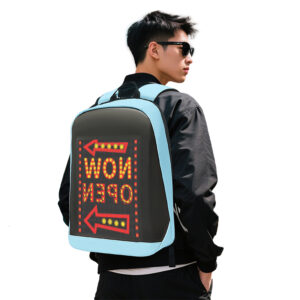
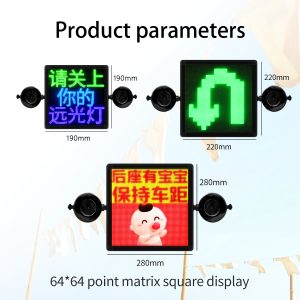
Outdoor LED display products need to work in brighter light, changing weather, and wider viewing distances than indoor products. A display that looks clear inside a room may become difficult to read outdoors. Before buying, it is worth checking the real use environment instead of choosing only by screen size or product photo.
Brightness is usually the first concern. Outdoor environments include sunlight, reflections, shadows, and changing weather. If the display will be used in daytime, ask for real outdoor photos or videos. If it will be used mostly at night, brightness adjustment becomes important. A screen that is too bright at night can be uncomfortable for viewers and may use power faster.
Water protection should be confirmed carefully. Some products can handle light rain or splashes, while others are designed only for dry environments. Check the waterproof level, cable protection, charging port cover, shell design, and installation method. If the display will stay outdoors for long periods, ask whether it is suitable for that use rather than assuming all LED products are weatherproof.
Power supply should match the working time. Portable outdoor displays may use batteries or power banks. Fixed displays may need stable DC power. Vehicle displays may connect to a car power outlet or another vehicle power system. Ask how long the display can run continuously, how brightness affects battery life, and how quickly the product can be recharged.
Viewing distance affects display size and pixel density. A small high-resolution display may look good up close, but it may not be readable from across a street. A larger display with strong brightness may be better for outdoor visibility even if the pixel detail is lower. Think about where people will stand or move when reading the message.
Installation needs to be secure. Outdoor products may face wind, vibration, movement, and repeated handling. Weak mounts can loosen over time. For temporary events, the display should be easy to install and remove. For vehicle or bicycle use, the display should not block safety equipment, driver visibility, or required lights. For shop windows, check whether glass reflection affects readability.
Content should be designed for outdoor reading. Use short text, strong contrast, simple graphics, and clear motion. Long paragraphs and small details are difficult to read when people are walking or driving past. If the product is used for advertising, the message should be readable in a few seconds. If it is used for safety, clarity matters more than decoration.
Material and heat control are also worth checking. Outdoor products may sit under sunlight for hours. Heat can affect batteries, adhesive parts, and electronic components. Ask about recommended working temperature, storage temperature, and whether the display should be removed during extreme weather. For portable products, weight and carrying comfort should also be considered.
Before ordering, prepare the use location, expected working time, installation surface, message type, viewing distance, and target quantity. These details help the supplier recommend a suitable model. Outdoor use is possible for many LED display products, but the right choice depends on brightness, protection, power, installation, and how the product will actually be used.
Buyers should also think about seasonal conditions. A product used in summer heat, winter cold, coastal humidity, or dusty outdoor markets may need stronger protection than a product used under a covered entrance. If the display will travel between locations, ask whether the package can protect it during repeated transport.
For outdoor promotion, the content plan should be tested before the campaign starts. Stand at the expected viewing distance and check whether the message can be read quickly. Test the product at the time of day when it will actually be used. A display that looks good in the office may need different brightness, color, or text size outdoors.
If the display will be installed in a public area, access for maintenance should be planned too. Staff may need to clean the screen, adjust the mount, recharge the battery, or replace a cable. A position that looks good but is difficult to reach can create problems after the first few days of use.
For temporary outdoor events, bring backup power and basic accessories. Extra cables, a power bank, mounting tape, or spare brackets can keep the display working if the site conditions are different from the original plan.
LED display products are usually easy to use, but they still need basic care. Good maintenance habits can keep the screen clear, reduce connection problems, protect the battery, and extend the product's working life. This is especially important ...
Car LED message displays are used for advertising, warning messages, delivery services, ride-share vehicles, fleet branding, and personal decoration. They are useful because the message can be changed without replacing a printed sign. Still, inst...
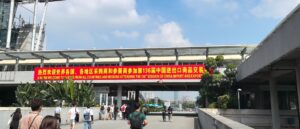
The 136th Session of the China Import and Export Fair, also known as the Canton Fair, provided an important opportunity for Shenzhen iLedShow Technology Co., Ltd. to meet global buyers and present its latest creative LED display products. As one ...
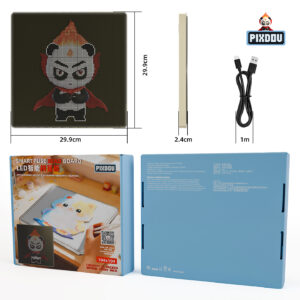
Are you still counting grids and squinting at paper patterns? Say goodbye to all that frustration. Meet the Smart Fuse Bead Board – the intelligent craft tool that makes fuse bead art easier, faster, and more fun for everyone. ...
 iledshow